Estate planning · Wills · Trusts · West Los Angeles
The plan you keep meaning to get to.
Let’s finish it.
Almost everyone who calls me has been putting this off. Not because they don’t care, but because it feels complicated and a little grim. It doesn’t have to be either. My goal is simple: get it done, so your family is protected and you can stop thinking about it.

36 years
in practice; licensed in California since 1990
Bar No. 145817
Wilshire Boulevard
12121 Wilshire Blvd, Suite 810, West Los Angeles
Phone first
one call to talk through your family and your home
In their words
When family plans go wrong
Short stories about ordinary families, and the one thing that would have changed each ending.
If you’re the one who drives Mom to appointments, or the one who lives far away, start here.

The form from 1994
Dad’s trust split everything between his two kids. A form he signed in 1994 sent his biggest account to his ex-wife.
The sister who went quiet
Denise did her parents’ taxes for years. As trustee she went quiet, and her brothers stopped trusting her.

The signature in the hard season
A memory diagnosis, a son who handled everything, a signature no one else saw. The other two found out after he died.
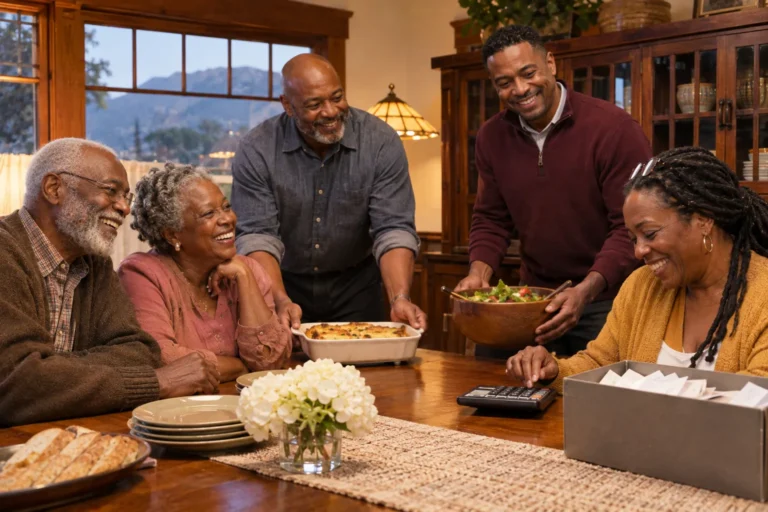
Illustrations. Not real families.
Why the house matters so much here
$56,000
What the law sets on a $1.5 million estate
Figured on the full value of the estate, before the mortgage is subtracted.
A funded trust keeps the house out of probate court.
Why: see the math
In California, an estate goes to probate court when the property in a person’s own name is worth more than the small-estate limit. Almost any home in Los Angeles is worth far more than that. A house that isn’t in a living trust will usually mean a public court case, months of waiting, and fees set by statute as a percentage of the estate.
Here is what “fees set by statute” means in practice. The fee is figured on the estate’s gross value, and a mortgage on the house doesn’t reduce it. The executor and the executor’s attorney are each paid on the same schedule (Probate Code sections 10800 and 10810).
| 4% of the first $100,000 | $4,000 |
| 3% of the next $100,000 | $3,000 |
| 2% of the next $800,000 | $16,000 |
| 1% of the remaining $500,000 | $5,000 |
| Executor | $28,000 |
| Executor’s attorney | $28,000 |
| Together | $56,000 |
Statutory, before extraordinary fees and costs. This is the fee the law sets for a probate estate, not a fee for planning.
“Funded” is the word that matters.
A trust only controls what has actually been put into it. I don’t consider a plan finished until the deed is recorded in the trust’s name and the accounts are retitled or given beneficiaries.
What a plan usually includes
A living trust
The main tool for keeping a California estate out of probate court. You stay in control during your life. If you become ill, or when you die, the person you choose takes over privately, without a judge.
A will
Even with a trust, you need a will to catch anything left outside it and, if you have young children, to name who will raise them.
Powers of attorney and a health care directive
The documents that let someone you trust pay your bills and speak with your doctors if you can’t. Without them, a family can end up in court just to help you.
Plans for where you are in life
How it works
- 1A conversationAbout your family, what you own, and what worries you.
- 2A draftWritten for your family, in plain English, for you to read and question.
- 3SigningDone the way California requires, with two witnesses for the will and a notary for the deed and power of attorney.
- 4FundingPutting the house and accounts into the trust, so it actually works.
Start with one phone call.
Most calls start with one worry. Tell John yours.
Where I help
Families in Brentwood, Westwood, West Los Angeles, Mar Vista, Culver City and Venice, near the Wilshire office, and across Los Angeles County, from Santa Monica and the Palisades to Hermosa Beach, and in neighboring counties too. See every community I serve →

Questions families ask
Do I need a trust, or is a will enough?
A will tells the court who gets what, so property that passes only by a will usually goes through probate once it is worth more than California’s small-estate limit (Probate Code section 13100). In Los Angeles, a house alone is usually well over that line. A funded living trust lets your family skip the court case. You still want a short will beside it, to catch anything left out and to name a guardian for young children.
Mom’s trust is twenty years old. Is it still good?
A trust doesn’t expire, so it may still work. The usual problems are practical: a refinance that took the house out of the trust, a trustee who has died or moved away, or children and grandchildren the trust never mentions. While Mom can still make decisions, she can amend it. A review starts with the deed and the account titles.
Dad has memory problems. Is it too late to sign anything?
Not necessarily. California law starts from the presumption that adults have capacity, and a diagnosis alone does not answer the question. Capacity is judged at the moment each document is signed (Probate Code section 810 and following): what matters is whether he understands that document when he signs it. The sooner he signs, with his own lawyer and no family member arranging it, the stronger the plan.
Does the house have to go through probate?
Not if it is in a funded living trust, or owned in a way that passes it automatically, such as joint tenancy or community property with right of survivorship. A house in one person’s name alone usually goes through probate, though California has shorter procedures for some smaller estates. Who should own the house after you, and how, is part of every plan. If someone has already died and the estate needs settling, that’s handled through my probate practice, at laprobatelawyers.com.
My brother is the trustee and won’t tell us anything. What can we do?
A trustee has to keep the beneficiaries reasonably informed and answer reasonable requests for information (Probate Code sections 16060 and 16061). Start with a polite written request for the trust and recent statements. If that goes nowhere, a beneficiary can ask the court to order an accounting (Probate Code section 17200). For a fight that has already started, that’s handled through my trust and will dispute practice, at myinheritance.com.
John J. Donahue, A Professional Law Corporation
12121 Wilshire Boulevard, Suite 810, Los Angeles, CA 90025
Tell John what’s worrying you.
The first conversation covers your family, what you own, and what a plan for you would include.
Or tell John what’s going on, and he’ll call you.